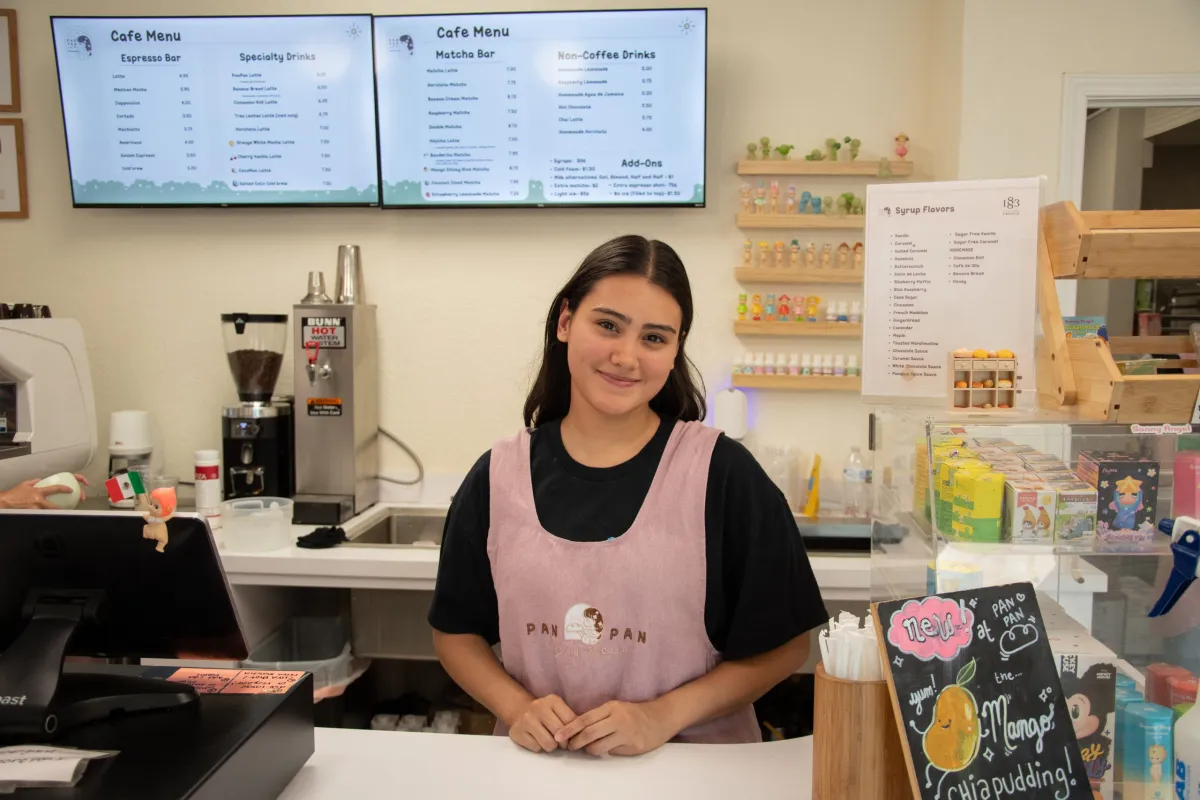
Smart Ways to Save Money When Opening a Coffee Shop
Let’s face it. When you’re in the process of launching a business, a budget is your best friend. Along the road to opening, there will be many important investments you’ll need to make: education, build-out, equipment, professional services, hiring, and more. Finding smart cost-savings along the way will make it possible to invest where it really matters.
When we say cost-savings, we’re not only talking about money. We’re also talking about time. Time is especially important in the much-awaited countdown to opening your doors (and finally starting to bring in revenue.)
In this article, we break down smart ways you can save money, save time, and avoid expensive mistakes in the process of opening your coffee shop.
What does it actually cost to open a coffee shop? More on that here.
Want a deeper dive? Learn how to apply all these cost-savers and many more in our 3-Day Coffee Business Master Class®.

Ways to Save Money When Opening a Coffee Shop
Invest in Coffee Business Education
We know it’s going to sound cliché coming from us, but investing in your education first will become the biggest money saver throughout the process. Without an education, you will not know how and where to save time and money. You won’t be able to see how a rushed lease or the wrong location could hamper your profits indefinitely. You’ll spend countless hours piecing the steps together rather than having all of them handed to you.
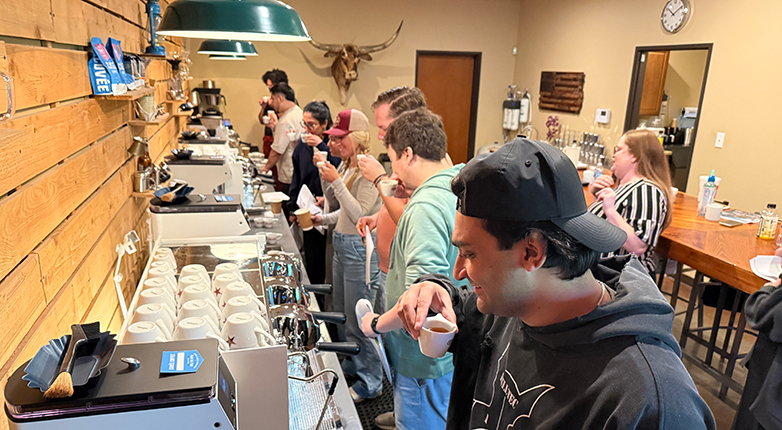
The very first thing you need to do is take a coffee business class. (Obviously, we recommend our 3-Day Coffee Business Master Class®.) The class will pay for itself over and over again during the life of your business.
Negotiate Your Lease
One of your biggest cost savings will take place before you ever move into your space: the terms of your lease.
Rent is going to be one of your biggest expenses. Being stuck in an unfavorable or unaffordable lease will be a huge weight to carry–no matter how much revenue you generate. That’s why it’s so important to negotiate. (Hire a commercial real estate attorney now to save countless dollars later.)
You can negotiate nearly everything. Base rent, triple nets and common area maintenance terms, the lease term, inspection and option periods, tenant improvement compensation, property repairs, and more. If you know how and what you can negotiate, you’ll cut costs drastically.
Access Equipment Discounts
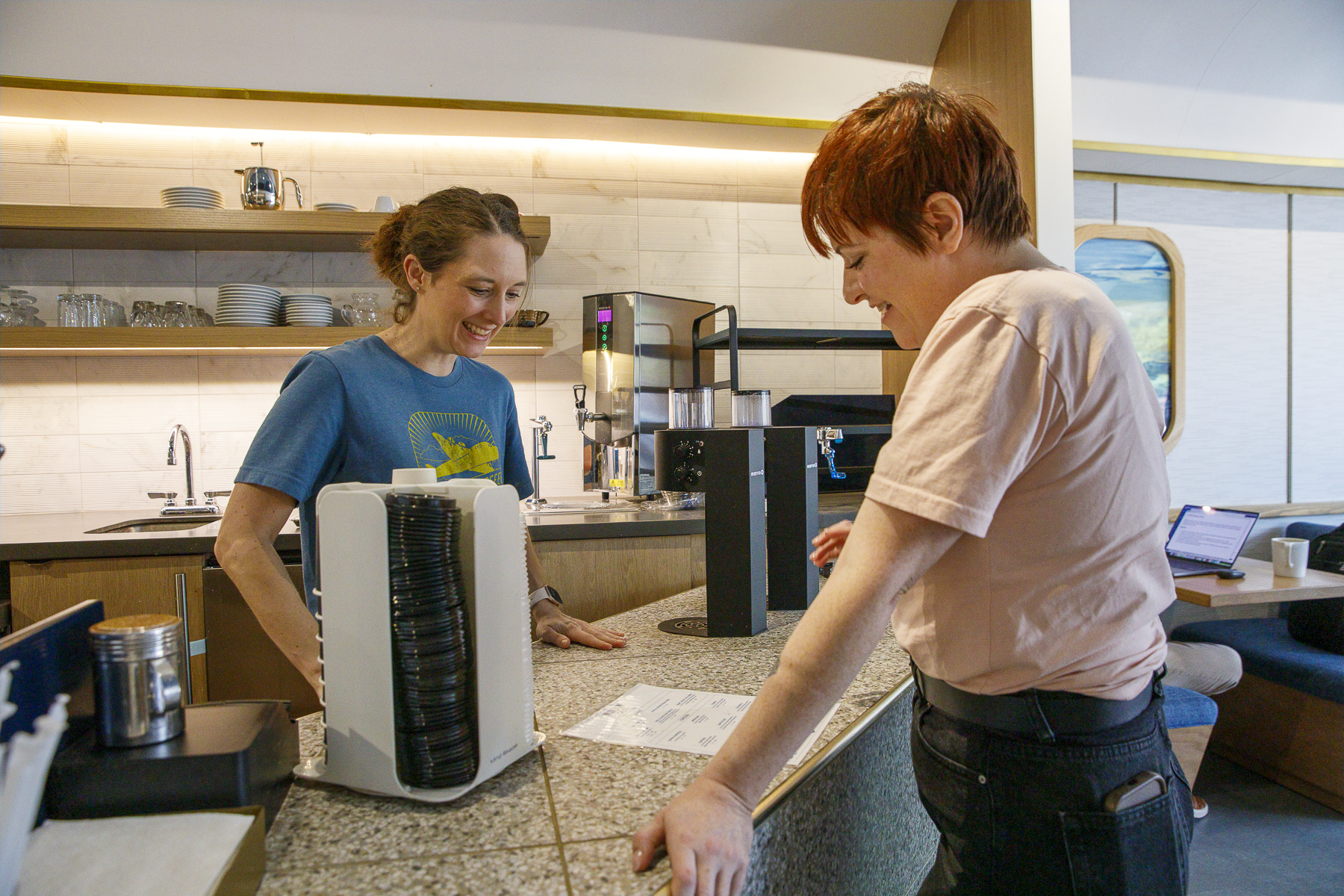
Another big investment will be purchasing your large equipment. Think espresso machines, grinders, and more. Our graduates have access to use our wholesale discounts when they take our 3-Day Coffee Business Master Class®. (These discounts alone will recover the cost of your tuition by a handsome multiple.)
Consider Starting with a Smaller (or Mobile) Format
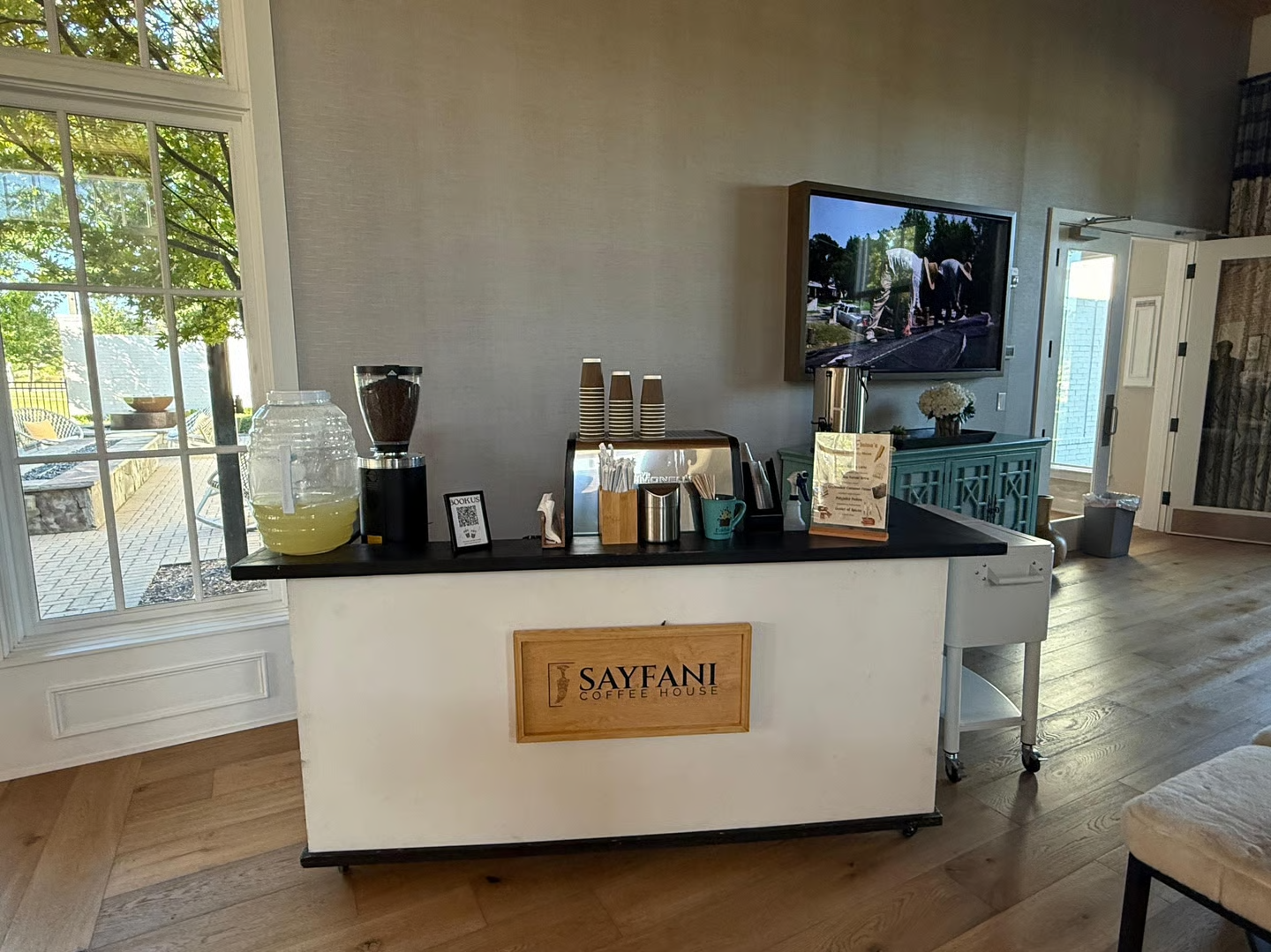
Even if you’re finding smart cost-savings, sometimes covering the expense for a brick-and-mortar cafe isn’t possible. That doesn’t mean you can’t open a coffee business. When your budget is tight, we recommend starting with a mobile format and scaling up.
With a coffee truck, van, trailer, cart, or catering business, you can be more nimble and experimental as you get established. Try various locations, grow a social media presence, build relationships with local businesses and customers. Before you know it, your business may be big enough for the next step. (Believe us, we’ve had many students do exactly that.)
Look for Grants
There is actually a lot of free capital you can obtain if you put in the effort to look for it. Join your local Chamber of Commerce, research nonprofits, and join business networks to access funding for your business.
Create a Comprehensive Financial Plan
You can’t save money if you don’t know how you’re spending it. In the process of opening your business, it’s important to become financially savvy. Here are the tools that help our students stay on track:
5-Year Financial Plan: This should include your rent, insurance, equipment, soft goods, buildout estimate, and more.
Cost of Goods Sold (COGS) and Labor, (together called “Prime Costs”): You might start generating a lot of revenue, but there won’t be much left in profit if it is all being used to cover these two significant expenses. More here.
Menu Pricing Strategy: Setting your prices based on the coffee shop down the street? That’s not a strategy. That’s a recipe for going out of business. We cover menu pricing here.

Ways to Save Time When Opening a Coffee Shop
Work with an Accountant and a Bookkeeper
Spending a little money early can save you a serious amount of time, stress, and cleanup later. When we suggest hiring an accountant and a bookkeeper early, it’s because the cost is small compared to the problems they help you avoid.
These are not optional roles. They protect you from tax mistakes, bad data, and operational blind spots that quietly compound as your business grows. A strong bookkeeper keeps your P&L and balance sheet clean from day one so you are not paying someone later to untangle months or years of confusion.
Just as important, you should own your financial system. Set up your own QuickBooks Online account and give your bookkeeper and accountant access as approved users. Avoid having your books live inside someone else’s account. If they ever move on, access can become slow, expensive, or messy. Ownership keeps you in control.
They can still do the heavy lifting. They can set everything up, run payroll inside QuickBooks, and build simple automations that keep your reporting clean and useful. When your financials are accurate and easy to understand, it becomes much easier to run the business profitably, know where your money is going, and position yourself for loans, partners, investors, and certain suppliers.
Find a Space that Was Previously a Restaurant or Cafe
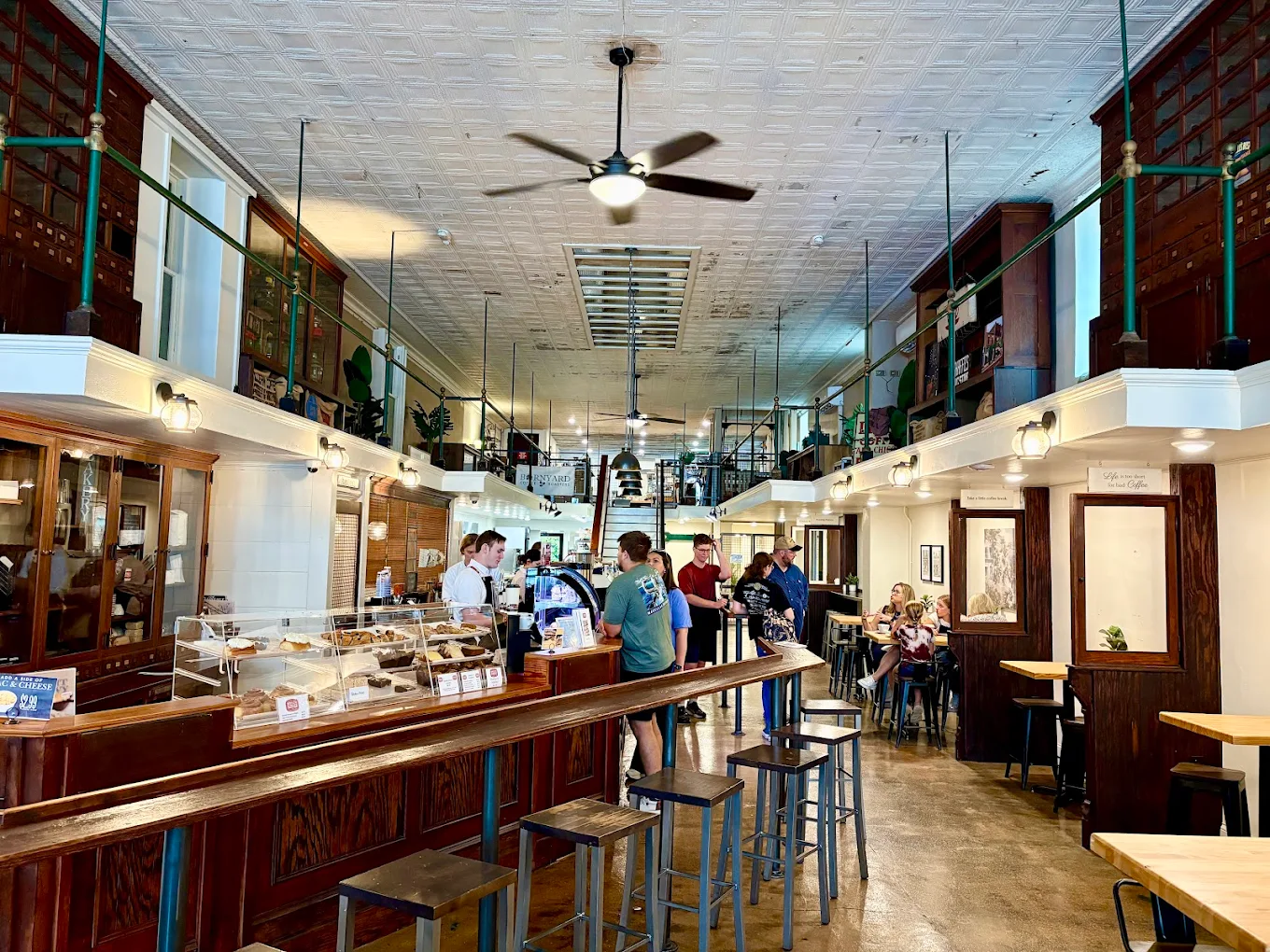
Locations that were previously utilized for food service will typically be zoned correctly, have a grease trap installed, and other features that will make the certificate of occupancy process much easier. They may be more expensive on the front end, but can get up and running in less time.
If you are moving into a space that is not currently zoned for food service, on average it can take at least three additional months to open. Plus, it will require a lot more money to bring it up to city code specifications.
Use these Major Time-Saving Resources
Opening a coffee shop is a complex undertaking. In this article alone, we discuss lease negotiation, financial projections, and café build out. When you can access expertly-researched resources from someone who knows the process, it will save you a great deal of time scouring the internet on your own. Here are a few resources we provide in class that save months in the opening process:
- Sample Letter of Intent (LOI) for your lease
- Large and small equipment lists
- Detailed 5-Year Financial Plan Template
- Coffee shop layout examples including large equipment placement, storage, customer experience, drive-thru, and more
- Coffee roaster and vendor information + contact info
- Sample menus and recipe book
- Employee Operations Manual
- Much more!
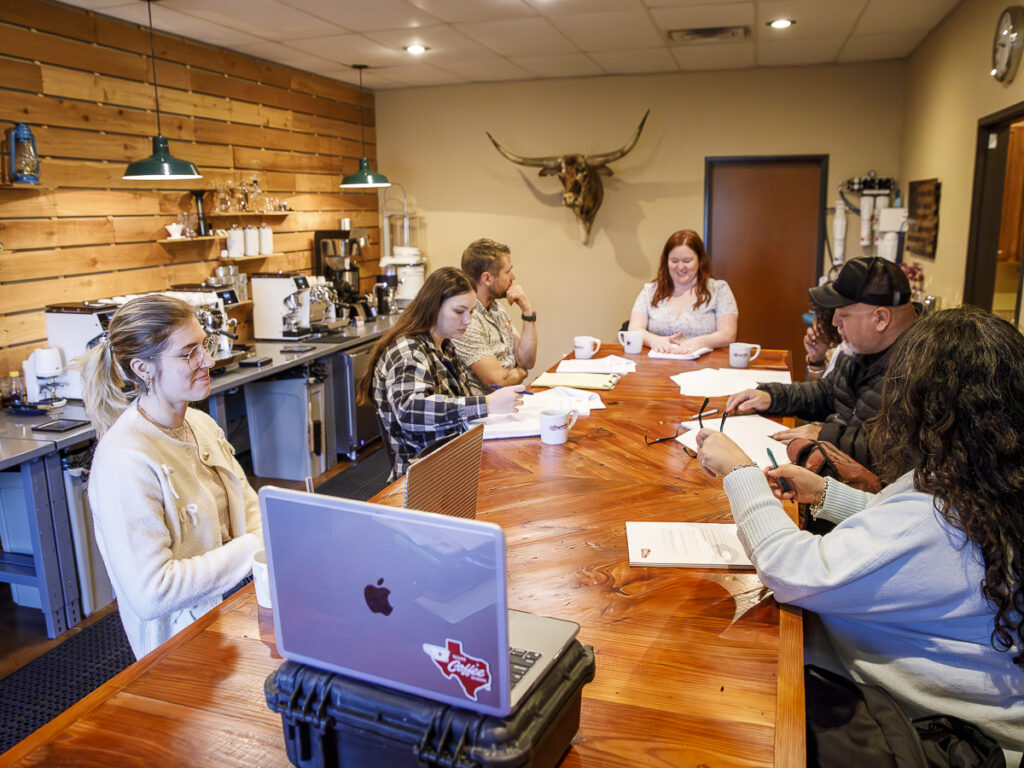

Avoid the Most Costly Mistakes When Opening a Coffee Shop
Choose the Most Profitable Location
One of the biggest mistakes you can make is to choose a location without doing your research first. Seemingly small things like the parking situation, neighboring business, or side of the street can make or break your profitability potential.
Before you sign a lease make sure it is in an area where people will identify with your business concept. Perform a competitive analysis and understand local market demand.
Count how many people drive and walk by over a period of time. Our students learn how to analyze earning potential versus cost of rent on locations they’re considering.
Choose the Right Contractor
Working with an architect first is actually a very efficient first step. Typically, architects can recommend contractors they like to use with restaurant experience.
Have your lawyer create a contract for your contractor that includes a bonus for on-time completion (up to code, passing all inspections) and penalties for missing deadlines.
Offer Training and Onboarding for Employees
Employee turnover isn’t just a headache, it’s a big expense. Often, employees leave because they never had adequate training, structure–or a clear understanding of what success looks like in their role.
Your employee retention strategy should include competitive wages, incentives, and a streamlined plan for operations. But first, invest time and money into comprehensive training. Your coffee shop will perform better (with less stress, and more profit) if you have built a strong operations system and trained your staff well.
Save Money When You Open a Coffee Shop with Texas Coffee School
Invest now, save later. (And then save again and again and again.) Take our 3-Day Coffee Business Master Class® to set yourself up for success and savings.
Frequently Asked Questions
What are some ways to save money when opening a coffee shop?
The best way to save when opening a coffee shop is to start with a solid foundation. We recommend investing in your coffee business education so that you know exactly how, when and where to save along the way. Our 3-Day Coffee Business Master Class® teaches students how to find savings when they negotiate their lease, purchase equipment, manage their budget, and more.
What are some ways to save time when opening a coffee shop?
Again, starting with a comprehensive education will save countless hours along the way. In addition, there are many time-savers on the path to opening. Working with an accountant from the get-go, finding a space already zoned and equipped for food service, and choosing the right contractor will save time in the process.
What are some of the most expensive mistakes an owner can make when opening a coffee shop?
Choosing the wrong location is perhaps one of the most costly mistakes a potential coffee shop owner can make. Other costly mistakes are getting stuck in unfavorable lease terms, working with a contractor without restaurant experience, or creating a culture with high employee turnover. Prevent these are more in our 3-Day Coffee Business Master Class®.
Featured Classes



Register for a Coffee Class
The Best Coffee Training Available
We’ve helped hundreds of students successfully launch their own coffee shop businesses. Join us in our 5-Star Rated Coffee Classes, whether you’re an aspiring entrepreneur looking to open a coffee shop, a manager, a barista or home enthusiast looking to sharpen your skills.