What It Actually Takes to Run a Successful Coffee Cart Business
A coffee cart is one of the most accessible entry points into coffee entrepreneurship available right now. Compared to a coffee truck ($35,000 to $100,000) or a traditional brick-and-mortar shop ($300,000 to $625,000 for a 1,500-square-foot space), a quality cart business can come together for a $7,500 to $15,000 all-in startup investment. With no long-term lease or build-out, a cart offers the freedom to move, experiment, and grow at your own pace.
However, accessible doesn’t mean without planning. The owners who get the most out of a coffee cart are the ones who have a clear strategy in place before they launch. That doesn’t mean you’re locked into a rigid, long term plan. Rather, it ensures your early decisions are informed choices rather than expensive lessons.
Below, we walk through some of the important planning points before opening a coffee cart.
No coffee business concept is too big or too small for our 3-Day Coffee Business Master Class®. Sign up today to learn everything you need to know to successfully launch and run your coffee business.
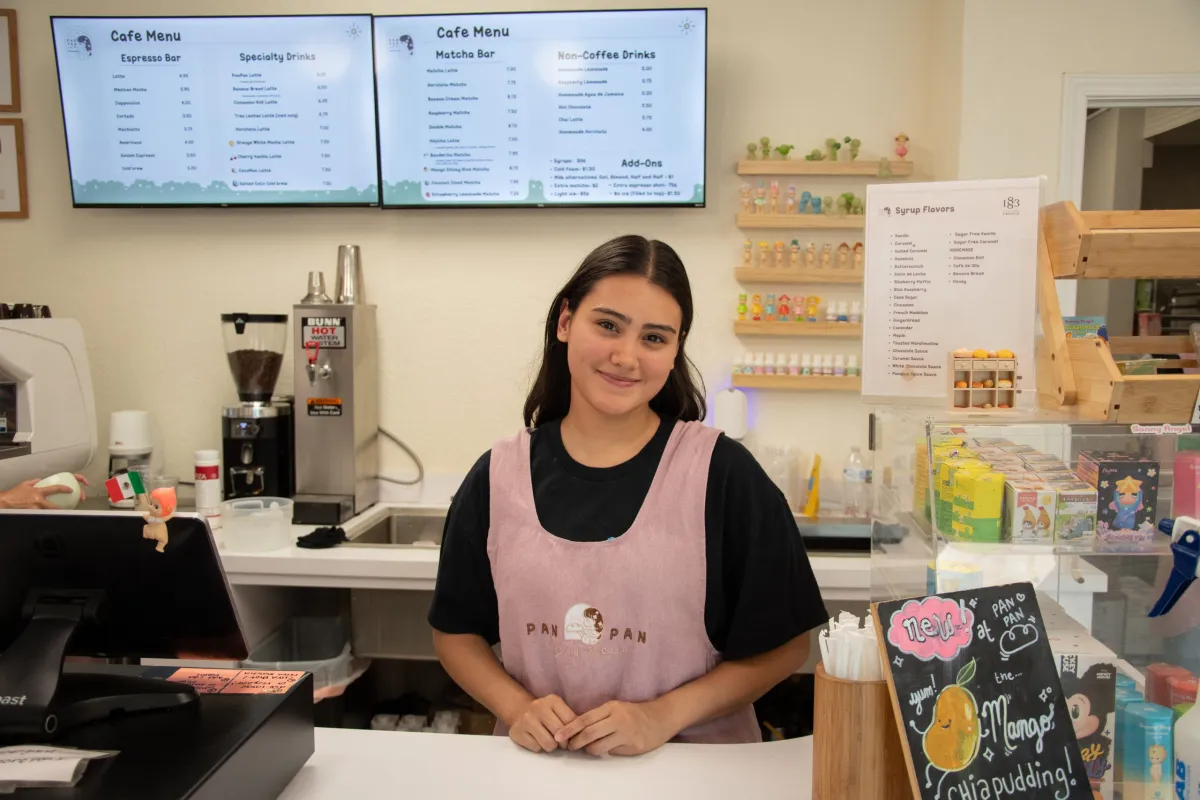
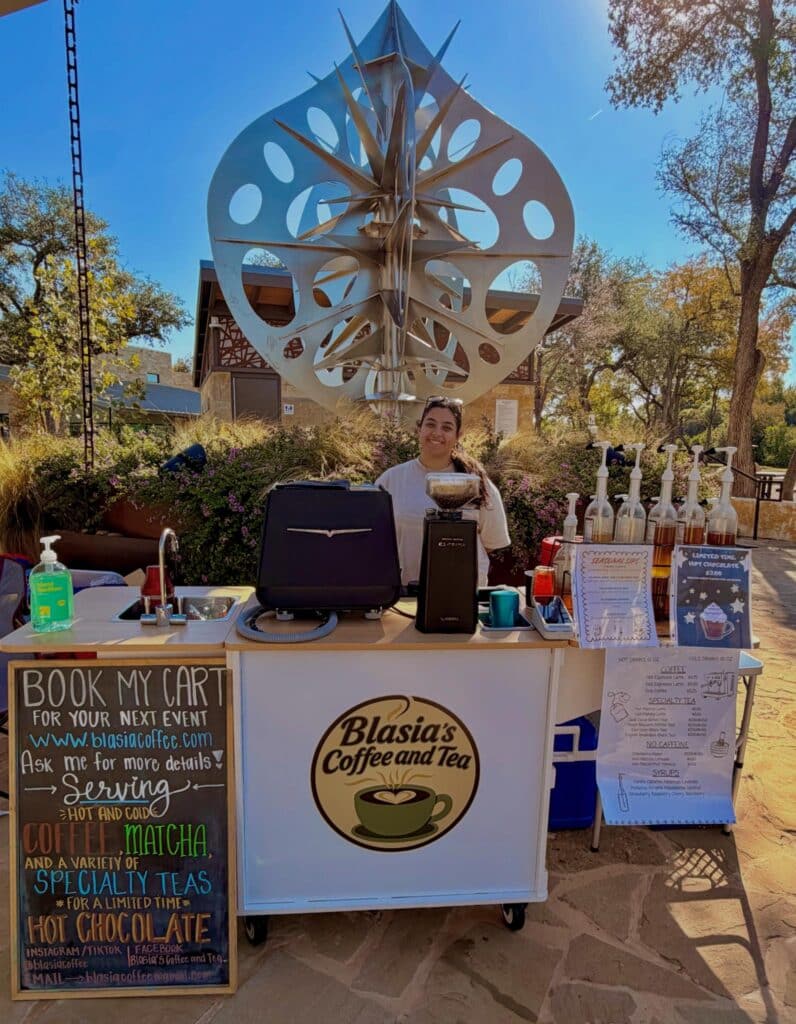
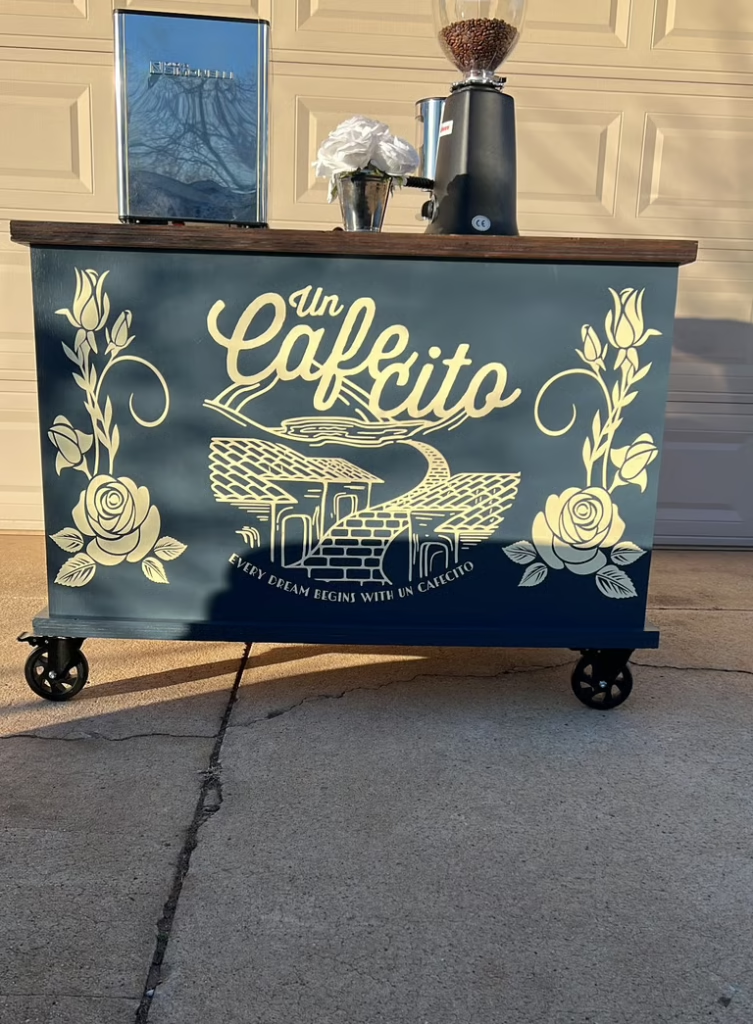
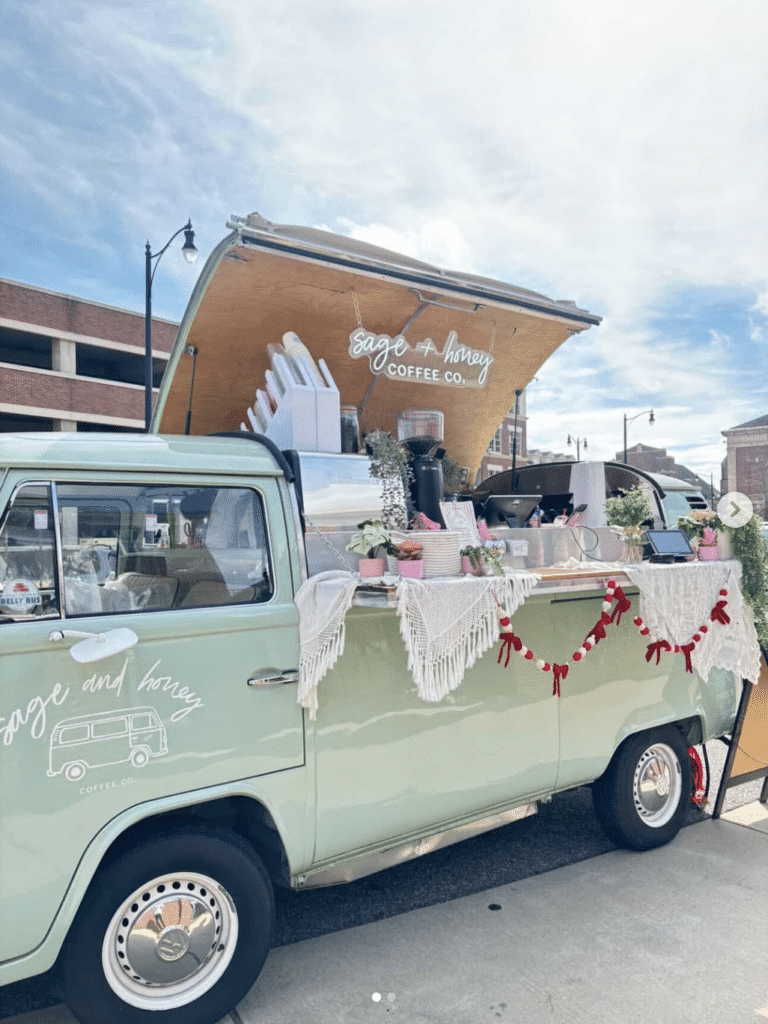
All images in this post feature mobile carts from Texas Coffee School graduates.
Know Why You’re Going with a Mobile Cart
The two most common reasons people choose a cart over a brick-and-mortar are affordability and flexibility. The lower startup cost is a genuine draw. And, for people who want to test a concept or run a coffee business on the side, the lower commitment matters too.
If affordability is your primary motivation, it’s important to build a budget and a financial plan. A cart is cheaper to open, but it still needs to generate enough income to justify the investment. Where will you operate? How many days per week? What does a realistic week of revenue actually look like? A lower barrier to entry doesn’t eliminate the need for a financial strategy.
If flexibility is what you’re after, your financial planning can help you inform your business model. Are you focused on events, catering, or partnering with a location consistently?
Knowing your answer early shapes smarter decisions about how much to invest, how to brand yourself, and what success looks like at the end of year one. For a deeper look at how a cart works as a side hustle entry point, we cover that here.
Treat Location Like a Laboratory
One of the most meaningful advantages a cart has over a fixed location is that you’re not locked into a single spot. However, you’ll still need to choose your location based on data, not vibes. The strategy for understanding a location’s profitability isn’t all that different for a cart than it is with a cafe.
We teach our students how to count foot traffic during the hours you’d actually be operating. We also clock nearby competitors to analyze demand.
Farmers markets and local events are also a low-commitment way to test a spot and build an audience before you plant a flag anywhere. Lady Sunshine Coffee, a coffee van and Texas Coffee School graduate, goes by a “three-time rule” for evaluating locations. She parks at a location three times before making a decision about its profitability.
Build Your Menu for the Cart, Not for a Café
With a cart, every item on your menu is a decision about space, speed, equipment, and efficiency.
Start with a small, focused menu of a few well-executed drinks. Our education team recommends building around items you can make at high volume and, where possible, prepping drinks in advance so you’re pouring and garnishing on site rather than building each one to order from scratch.
Think carefully about your equipment, too. An espresso machine is an amazing tool, but may not be ideal or the most mobile equipment for every cart concept. As an alternative, you might consider cold brew concentrate system. Storing concentrate in bag-in-box (BIB) or containers with a dispensing system lets you serve high volume, fast, with typically higher profit margins.
- The Brew Bomb Hive Café can produce fresh, high-strength concentrate in about 30 minutes, staying fresh tasting for up to seven to ten days refrigerated.
- Marco POUR’D is a dispensing system that can dispense straight cold brew concentrate (espresso strength) for use in iced lattes, or dilute on-demand for ready to drink cold brew.
- Third Wave Water creates pre-measured mineral packets you can add to a 5 gallon jug of distilled or reverse osmosis water for perfect tasting coffee.
For more on seasonal menu strategy, see our guide to summer menu logistics for mobile operators.
Read Up on Compliance (Then Make a Quick Phone Call)
Permits, health codes, and commissary requirements vary significantly by county and state. Setups that pass inspection in one county can fail two counties over.
It would be an expensive mistake to purchase your cart and equipment before making a free phone call. Call your local health department before you commit to a cart design, buy equipment, or build your business plan around a specific setup.
Ask what’s required for a mobile coffee operation in your area. Don’t only rely on what’s posted online, since requirements can change, and many jurisdictions haven’t kept their published guidance current. Be sure to get the most current requirements in writing.
Think About Whether the Cart Is the Destination or the Starting Line
A coffee cart is a legitimate permanent business. It’s also a proven path to something larger. What’s worth deciding early is which lane you’re in, because it shapes how you invest, how you brand yourself, and how you operate from the start.
One approach worth considering while you’re still figuring that out: catering contracts. Booking weddings, corporate events, and private events, gives you a built-in customer base and predictable revenue without relying entirely on daily foot traffic. Some coffee cart owners might focus entirely on catering jobs. Others use events to stay financially stable while they work toward scaling. Either way, having events planned early can take financial pressure off.
Carts are flexible. Especially with a solid strategy.
Texas Coffee School’s 3-Day Coffee Business Master Class® covers mobile coffee concepts as part of its full curriculum, including business planning, menu strategy, financial modeling, and the operational fundamentals that give cart operators a solid foundation to build from. If you’re considering a mobile coffee concept and want to go in prepared, we’d love to have you in our 3-Day Coffee Business Master Class®.
Featured Classes



Register for a Coffee Class
The Best Coffee Training Available
We’ve helped hundreds of students successfully launch their own coffee shop businesses. Join us in our 5-Star Rated Coffee Classes, whether you’re an aspiring entrepreneur looking to open a coffee shop, a manager, a barista or home enthusiast looking to sharpen your skills.