How To Choose The Best Coffee Grinder For Home Brewing
Do you pour your heart into brewing specialty coffee at home? You’ve bought the best beans, invested in top tech, followed recipes perfectly, and measured water ratios like a chemist. You thought you did everything right, but result fell flat. If this has happened to you, you’re not alone. For countless home brewers, the missing piece is not the beans, the recipe, or even the brewing device. It is often the grinder.
The grinder you use (and how you use it) directly impacts your coffee quality.
As Tom Vincent, Founder and CEO of Texas Coffee School, explains, “Once coffee beans are ground, their flavor and fragrance begin deteriorating due to oxidation, moisture exposure, and other environmental factors. From my experience, within as little as thirty minutes, the taste can begin to noticeably degrade. By 24 hours, much of what makes the coffee taste and smell interesting is gone.”
Grinding your coffee at home immediately before brewing is one of the simplest and most powerful upgrades you can make to your daily routine. Not only does it preserve the vibrant aromas locked inside each bean, but it also gives you control over grind particle size, a crucial detail for everything from espresso to French press. The difference between a cup that tastes harsh and one that tastes balanced often comes down to just a small grind adjustment.
This article is for home coffee enthusiasts who want café-quality results in their own kitchen without being distracted by lifestyle blogger chatter or surface-level tips. We draw directly on Tom’s expertise in specialty coffee brewing, extraction, and equipment, built over nearly 20 years working at the cutting edge of the specialty coffee industry.
Here is what you will discover:
- Why grinding fresh dramatically improves taste
- How grind particle size influences extraction and how to fix common flavor problems
- What to look for when buying the best coffee grinder for home use
- How to keep coffee beans fresh without overcomplicating storage
- Tom Vincent’s favorite grinder tips and recommendations
Your coffee deserves better than “good enough.” Freshness, consistency, and control are the three levers that turn home coffee grinding into something extraordinary. The right grinder helps you master all three.

Why is Freshness the Foundation of Great Coffee?
Vincent puts it plainly. “Grinding your own coffee gives you a level of freshness and flavor that pre-ground coffee just can’t equal. (Especially if it isn’t stored in nitrogen flushed packaging.)” When beans are pre-ground, oxygen and moisture quickly begin to work against the natural oils and aromatic compounds in the coffee. “From my experience, within as little as thirty minutes, flavor can begin to noticeably degrade. By 24 hours much of the character serious coffee enthusiasts look for is gone.” To a casual drinker this may not matter, especially if that is the standard they are used to. But if you are here reading this, chances are you are aiming to replicate café-quality coffee at home.
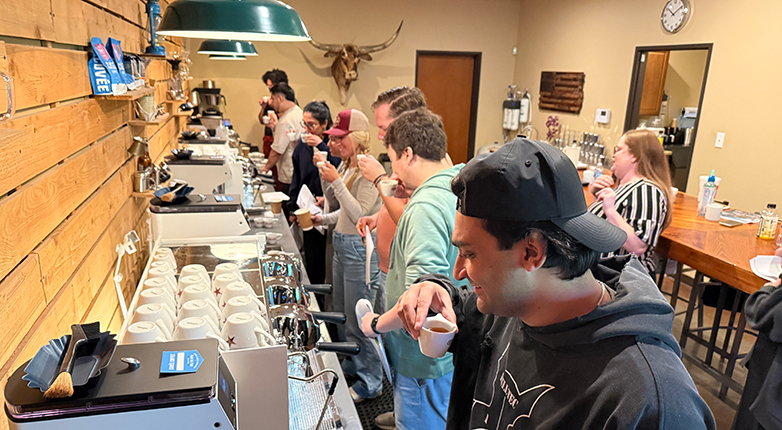
“At Texas Coffee School we conduct grind freshness experiments every week in class. Students compare coffee that was ground hours earlier to the same beans ground fresh, all on top tier Mahlkönig EK43 commercial grinder. The difference is night and day. The freshly ground coffee always tastes better. For many students, this simple experiment becomes a lightbulb moment.”
A well-known coffee influencer has explored this topic, suggesting that stale grounds from a high-end grinder like the EK43 can sometimes taste better than fresh grounds from a cheap one. While that experiment raises an interesting point, the takeaway for serious home enthusiasts is clear. Freshness matters, but grinder quality matters just as much. Inexpensive grinders with low-grade burrs rarely produce the clarity, sweetness, or balance that a well-engineered grinder can deliver.
Just as important, grinding at home gives you control. Espresso, pour over, French press, and cold brew all demand different grind settings to match their extraction times. Without the precision of a quality grinder, you are locked into a one-size-fits-all compromise that makes it nearly impossible to achieve the depth, sweetness, and café-level flavor that defines specialty coffee.
Explore other trending topics on our blog. See how consumers are reconsidering decaf coffee, or discover summer drink trends.

How Does Grind Size Affect Coffee Flavor?
Grind particle size can vastly change how your coffee tastes. “Grind particle size affects the speed and amount of extraction,” Tom shares. “It is critical that you select a grind size that properly aligns with the water contact time of your chosen brewing method to prevent under or over-extraction. As a general rule, shorter brew times should be paired with a finer grind, while longer brew times should be paired with a coarser grind.”
If your coffee still tastes flat, underdeveloped, or finishes with a dry, bitter strip down the tongue, adjust your grind a little finer. That small change can bring flavors back into balance. On the other hand, if it tastes harsh, metallic, or excessively burnt, try making the grind slightly coarser.
“Most good home grinders respond well to small adjustments,” Tom says. “In my own routine, this is usually the first place I look and often the last.”
Quick Fix Guide: How to Adjust Coffee Grind Size
Here’s how to quickly fix grind size problems:
- If coffee tastes flat, weak, or underdeveloped, grind finer.
- If coffee tastes harsh, metallic, or burned, grind coarser.
- Always adjust in small increments to fine tune balance.

Old flat steel grinder burrs
What Should You Look for in a Home Coffee Grinder?
One common mistake: overspending on a brewing device and underspending on the grinder. Tom explains, “The quality of the grinder is just as important as the brewer, and in many cases, even more important. If you cannot invest in both, I would prioritize the grinder.”
- Avoid blade grinders. “They are about as consistent as using a hammer to crush beans.”
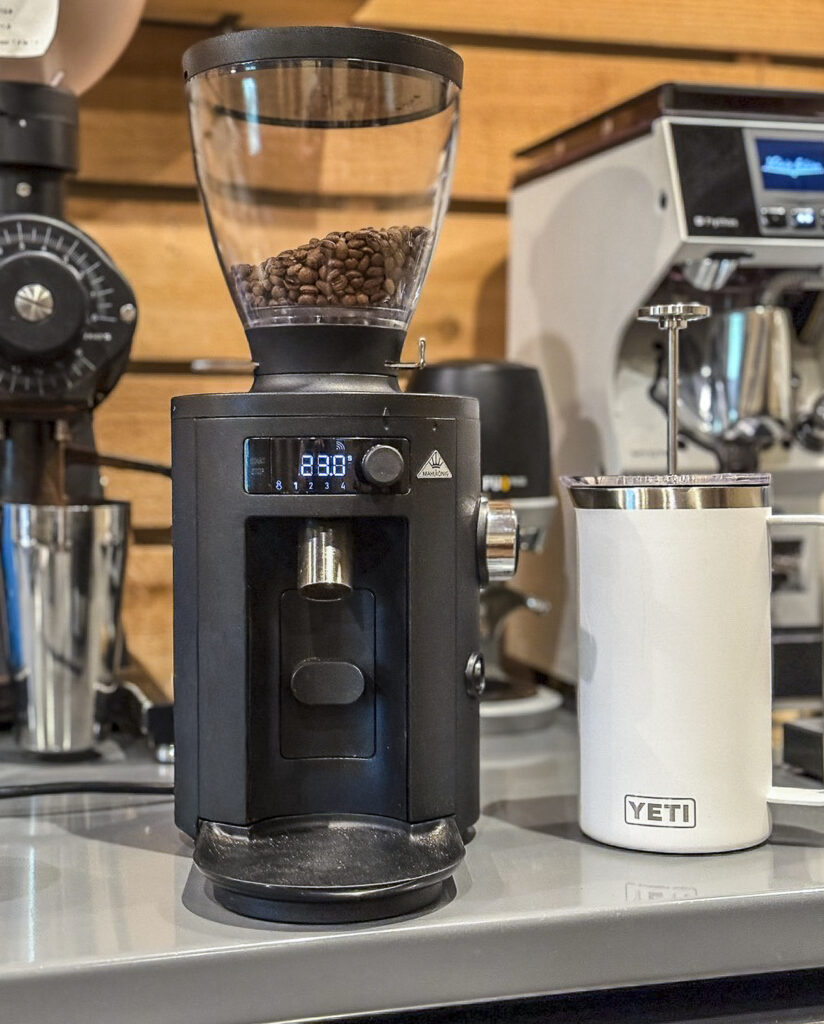
- Choose a burr grinder. Burrs are the parts that do the actual grinding. Flat burrs are typically more precise, while conical burrs grind faster and generate less heat.
- Select metal burrs over ceramic. Metal burrs deliver better precision and durability. They avoid chipping if a small stone slips through with the beans.
- Get a higher quality grinder. Lower-cost grinders usually have cheaper burrs and motors that struggle to produce consistently good results. Even if your coffee is ground fresh, you’ll notice a clear improvement in flavor when you move up to a well-built home grinder, like the ones recommended below.
By focusing on these essentials, home brewers can avoid wasted money and disappointment in their cup. A reliable burr grinder not only unlocks consistency across brew methods but also ensures that every cup tastes closer to what the roaster intended.

How to Keep Coffee Beans Fresh at Home
Tom advises keeping storage simple. “We honestly recommend storing it in the bag it came in from the roaster. Those bags usually have a one-way valve you can push extra air out of as you roll the bag tightly closed. They also don’t impart flavor on the coffee. Avoid transferring to a plastic bag or container, even if it has a zipper/seal. The coffee will likely start tasting like plastic.”
Simple Storage Habits
Follow these steps to keep coffee beans fresh:
- Buy only what you plan to drink in about a week
- Start brewing beans seven to ten days after roasting
- Finish the bag within seven to ten days of opening
- Store beans in their original roaster bag with a one-way valve, kept in a cool place like a cupboard

What is a Good Home Coffee Grinder Recommendation From Real Pros?
After extensive testing in home and professional settings, Vincent has a few standouts he personally uses. These are not paid endorsements. They are his real opinions as of the writing of this article.
- Victoria Arduino Atom 65. My current favorite home grinder across all brew methods. Commercial grade quality, precision, and results. Best tasting coffee in the full range of the grind spectrum. No retention, least messy, quiet, commercial burrs/motor, but also more spendy.
- Mahlkönig X54 Allround. Versatile across all brew methods, but puts off a lot of coffee chaff on coarser grind settings (not a deal breaker). Very good value/performance from one of the most common brands you see on commercial coffee bars. A noticeable step up in taste over most lower tier “good grinders.”
- Baratza Forté BG with steel burrs. Excellent for non-espresso methods with a built-in scale. Loudest of the 3 grinders. The two grinders above produced coffee that tasted noticeably better.

The Victoria Arduino Atom 65 grinder is extremely precise
Single-dose grinders are trending with home enthusiasts. And the Mahlkönig X54 SD is a strong alternative to the X54 Allround. Vincent adds, “Buy once, cry once. Spend the money to get a top-level grinder, take care of it, and it will last for years. Remember, this is how you start your day, every day.”
Conclusion: Take Your Home Brewing Further
The grinder you choose shapes every part of your coffee experience. Freshness, consistency, and control over grind size are major factors in transforming a bag of beans into a café-quality cup at home. With the right grinder, you are not just making coffee. You are unlocking the flavors your roaster worked hard to preserve.
If you are ready to build more skill and confidence, the 2-Day Barista Training Class at Texas Coffee School is the perfect next step. For a broader overview of options, explore all coffee classes to find the right fit for your goals.
Frequently Asked Questions
Q: Why is grinding your own coffee beans so important?
A: Coffee begins to lose flavor within just 30 minutes of grinding. Oils and aromas escape, leaving the cup flat. Grinding right before brewing supports flavor and balance that is difficult to achieve with pre-ground beans.
Q: How do I know if my grind size matches my brew method?
A: Taste is the most reliable guide. If coffee tastes flat, weak, or underdeveloped, grind finer. If it tastes bitter, harsh, or metallic, grind coarser. Small adjustments can move you toward consistent café-quality results at home.
Q: What kind of grinder should home brewers purchase?
A: A burr grinder with metal burrs is the gold standard for home brewing. A quality burr grinder improves control, clarity, and flavor for espresso, pour over, French press, and cold brew.
Q: How should I store coffee beans to keep them fresh?
A: Keep beans in the original roaster bag with a one-way valve. Keep them sealed in a cool, dark cupboard. Start brewing 7 to 10 days after roasting and finish the bag within 7 to 10 days of opening. Avoid plastic zipper bags. For hands-on fundamentals, see the 2-Day Barista Training Class.
Q: What grinding mistakes do home brewers often make?
A: Using blade grinders, grinding too far in advance, and mismatching grind size to the brew method are common pitfalls. These cause flat, bitter, or inconsistent cups. Focus on fresh grinding and small adjustments for better balance and sweetness.
Q: Is pre-ground coffee ever worth using?
A: It may seem convenient, but pre-ground coffee loses flavor and aroma quickly, often in as little as 30 minutes. Casual drinkers may not mind. Serious home brewers aiming for café-quality results will get better results grinding fresh with a quality burr grinder.
Q: Do different brew methods really need different grind sizes?
A: Yes. Each brewing method requires a grind size that matches its contact time with water. Espresso needs a very fine grind for short extractions. French press requires a coarse grind for longer steeping. Matching grind size to water contact time is essential for balanced flavor.
Featured Classes


Register for a Coffee Class
The Best Coffee Training Available
We’ve helped hundreds of students successfully launch their own coffee shop businesses. Join us in our 5-Star Rated Coffee Classes, whether you’re an aspiring entrepreneur looking to open a coffee shop, a manager, a barista or home enthusiast looking to sharpen your skills.