Coffee Cart Logistics: Planning, Building, and Event Execution
More and more of our graduates are starting their coffee businesses as a mobile coffee cart. Why? A cart is the most affordable way to launch a coffee business, with about a $7,500 to $15,000 startup investment. It’s a business model with less risk, but not with less strategy. Every decision about your cart, equipment, menu, and water system affects how fast you can serve and how smoothly an event runs. What’s at stake? Your bottom line.
We’ve written about the overall strategy behind a successful coffee cart business, from choosing locations to deciding whether your cart is a destination or a starting line. In this article, we focus on the day-to-day logistics and considerations we teach aspiring cart owners in our coffee business classes.
Planning a mobile coffee concept? Our 3-Day Coffee Business Master Class® covers everything you need to launch and run your coffee business, including mobile carts.
Build a Cart That Moves With You
Spoiler alert: you’re going to have to move your cart. Every component of your mobile business needs to be packed, unpacked, transported, and stored. While it might sound obvious, sometimes a cart owner will purchase all of the necessary cart equipment only to find that they don’t have a vehicle it fits in or a good place to store it.
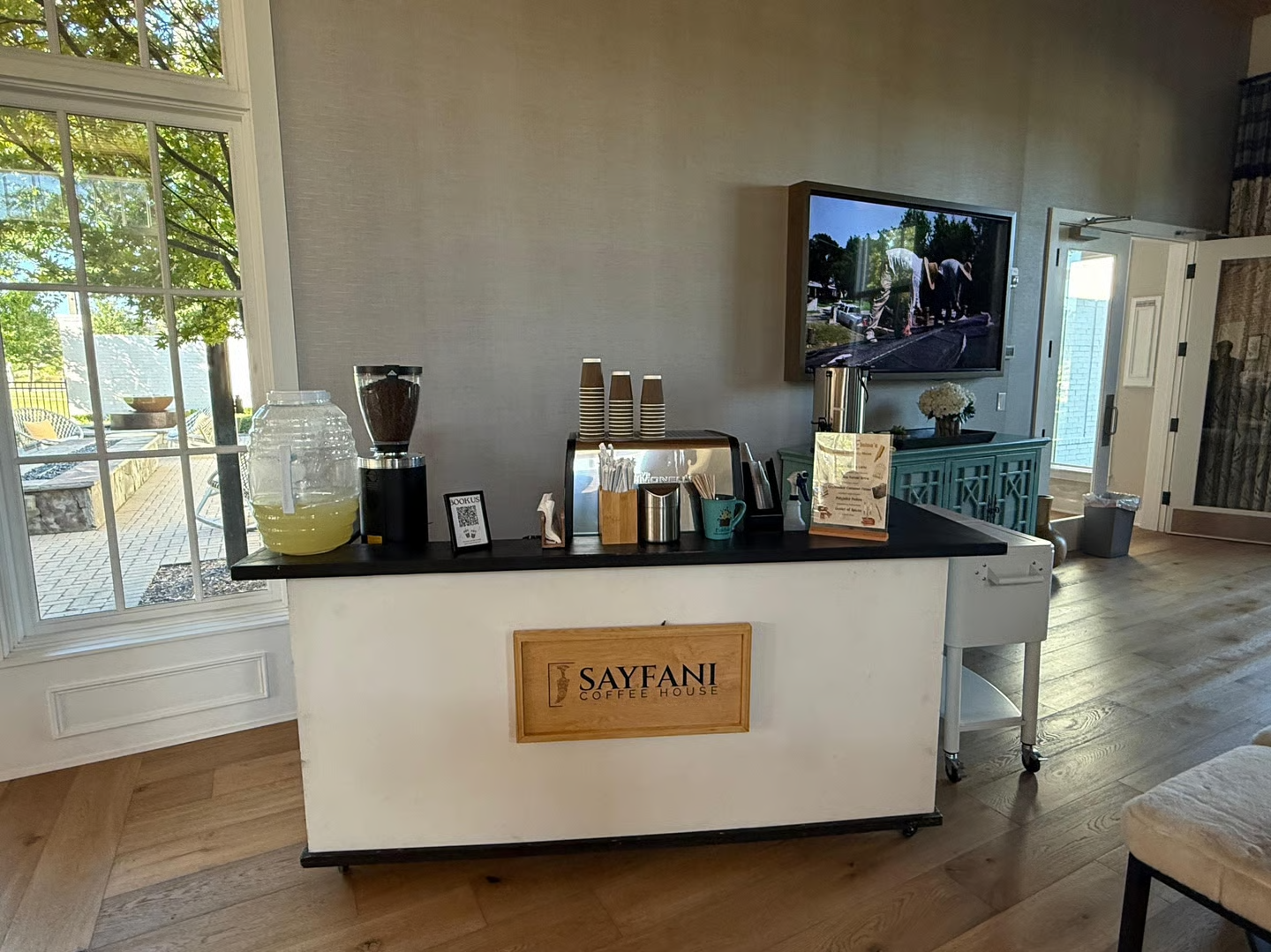
Keeping in mind that the best cart setups are easy to transport, deploy, and break down after every event, here are the larger items you’ll need to account for (at a minimum):
- The cart itself
- Plumbing
- Electricity
- Water
- Cooler/Ice
- Cups
- An efficient way to brew and dispense coffee
Custom cart options range from solid-frame builds to carts that disassemble and fit in a trunk. Some companies also offer modular systems that simplify electrical and plumbing installation. Shop carefully, though. Some carts are built sturdier and last longer than less expensive options. We recommend our favorite packages to students in our 3-Day Coffee Business Master Class®.

Know Health Department Requirements Before You Build Your Cart
If you plan to sell individual drinks directly to the public, your health department may require your cart to function as a self-contained mobile food establishment. Depending on your jurisdiction and menu, that can include:
- A three-compartment sink for washing, rinsing, and sanitizing utensils
- A separate handwashing setup
- Hot and cold running water
- Freshwater and wastewater tanks
- Refrigeration/cold storage and other food-safety equipment
In some states, the wastewater tank must hold at least 15% more than the freshwater tank. The sinks can be small, but the plumbing, tanks, and space they need add cost and complexity to your build. That’s why we recommend calling your local health department before you buy or build a cart.
Figure Out Your Coffee Equipment Strategy
You have several main paths for brewing on a cart, two of the more popular are espresso, and cold brew concentrate.
Cold brew concentrate is the more cost-effective and service-efficient option. Store concentrate in bag-in-box (BIB) containers and pair it with a dispensing system. The Marco POUR’D dispenses concentrate and dilutes it precisely into ready-to-drink cold brew. The Brew Bomb Quick Dose Dispenser dispenses precise doses of concentrate without electricity. Either way, concentrate can serve as the base for your cold drinks in place of espresso. The tradeoff is ice capacity and storage. (For more on concentrate, see our guide to summer logistics for mobile coffee carts.)
Espresso lets you offer just about any hot or cold espresso drink, but your machine choice is critical. Many smaller machines, including popular home and prosumer models, have limited boiler capacity and aren’t built for sustained commercial production. They can lose steaming power after a few back-to-back milk drinks, and service slows or stops while the machine recovers. At a busy event, that becomes a major bottleneck.
In our 3-Day Coffee Business Master Class®, we offer a full mobile cart equipment list that takes set up, deployment, and transportation into consideration. We list our top espresso machines for carts, which we’ve tested for cart service. They offer the best combination of production capacity, practical electrical requirements, and long-term reliability.
Design a Menu That Prevents Bottlenecks
Carts cost less to open than trucks and trailers, but they share some of the same logistical challenges. One of the biggest concerns is preventing bottlenecks, especially if you’re operating as the sole barista at an event. One good way to prevent inefficiencies is to plan your menu around them.
- Choose drinks you can make fast. Skip anything that has to be hand shaken, whisked to order, or elaborately garnished.
- Limit signature drinks. Keep your event menu to a selection of classics and no more than two signature drinks. Multi-ingredient signatures slow your workflow and lengthen lines.
- Speed up iced drinks. Use cold brew concentrate or chilled, pre-batched espresso instead of pulling each shot to order (iced drinks only).
- Plan for ice. Keeping enough ice on hand is one of the toughest parts of cart service, and it adds considerable weight. Budget for the cold storage, transportation, labor, and cost it takes to maintain your supply.
- Keep iced options simple. Every pre-batched drink needs its own containers, cold storage, and carrying capacity. Iced lattes are often a better fit because you’re already bringing the milk and syrups.
- Cap cups at 12 ounces or less. Smaller cup sizes stretch your product further.


Store Your Cart and Care for Its Water System
A small climate-controlled storage unit is a smart home base for your cart. It protects your machine’s boiler from freezing and keeps supplies from spoiling in extreme weather. Units can cost as little as $100 per month.
As a conservative operating policy, never leave untreated water in your freshwater tank and plumbing lines if the cart will sit for more than five days. You have two options. Always drain the system completely and let it dry.
Before returning to service, sanitize the lines and fresh water tanks with appropriate food safe sanitizing solution per health department requirements. Keep the sanitizing solution out of your espresso machine boiler(s). Disconnect or bypass your espresso machine it before drawing in the solution or it could damage the boiler and heating elements. Allow the boilers to reach operating temperature and flush them with plenty of fresh potable water before serving any drinks.
More Logistical Considerations for Coffee Carts
Unlike showing up to the same café every day, cart owners have to adapt to new venues, new locations, weather, and more. Here are a few more logistical considerations owners should keep in mind as they plan their cart events:
- Weather. If you’re outside, will you need shade or popup rain cover?
- Parking. It helps to scout the venue before the day of to know how far your parking will be from your set-up spot.
- Loading and unloading. What will you need to get your equipment from your vehicle to where you need to set up? Wheels? A cart? Extra people? Plan ahead.
- Permits. They might be different at a private home than they do from a farmer’s market. Make sure you’re covered before the event.
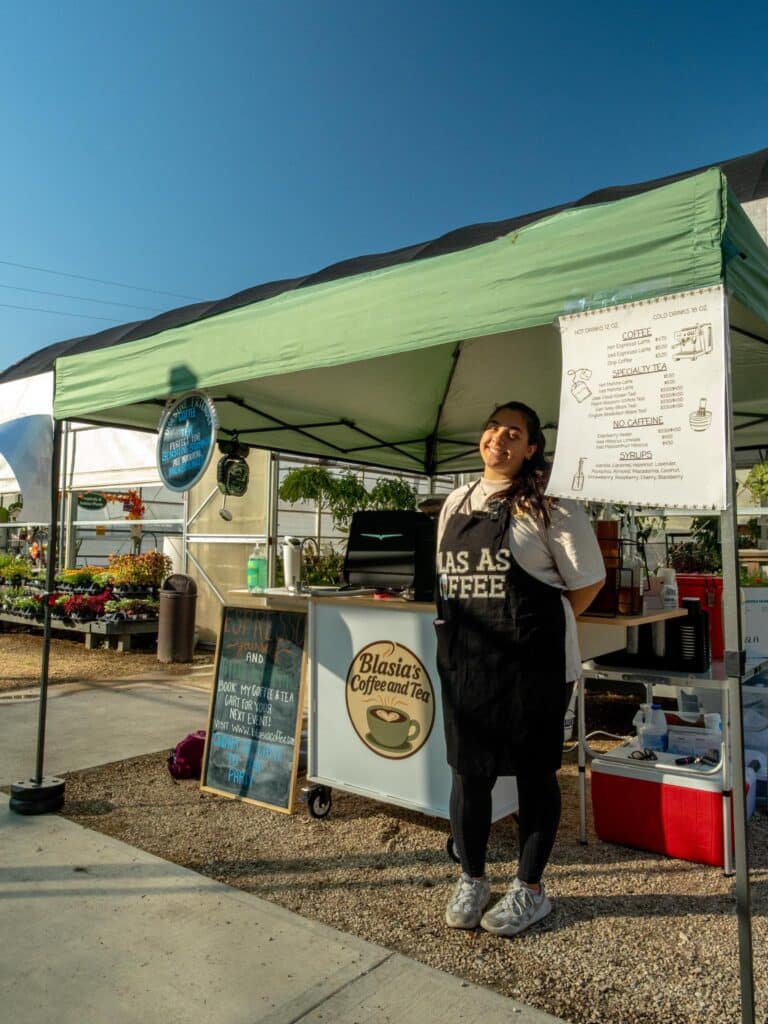
Want more logistical considerations from a real cart owner? Our former student, owner of Blasia’s Coffee and Tea, walked us through what she learned after her first year of cart ownership in this article:
Blasia’s Coffee and Tea: A Full Time Teacher Scales a Coffee Business on the Side
(Quick side note: Since publishing Blasia’s article less than a year ago, she has scaled up from a cart to a truck and left her teaching position to pursue her coffee business full time. And, it all started with a cart in the summer and on weekends.)
Learn Mobile Coffee Logistics Hands-On
Whether you’re starting a cart as your main business or as a side business, smart logistics set you up for smooth service from your first event. Our 3-Day Coffee Business Master Class® covers mobile coffee concepts as part of its full curriculum, including business planning, menu strategy, financial modeling, and operational fundamentals. Reserve your seat today.
Featured Classes


Register for a Coffee Class
The Best Coffee Training Available
We’ve helped hundreds of students successfully launch their own coffee shop businesses. Join us in our 5-Star Rated Coffee Classes, whether you’re an aspiring entrepreneur looking to open a coffee shop, a manager, a barista or home enthusiast looking to sharpen your skills.