Blasia’s Coffee and Tea: A Full-Time Teacher Scales a Coffee Business on the Side
Blasia Esposito is finishing up her third year as a 7th grade English teacher. She was in her classroom when our team spoke to her on Zoom, backlit by string lights and an announcement of “13 Days Left of School” written on the whiteboard.
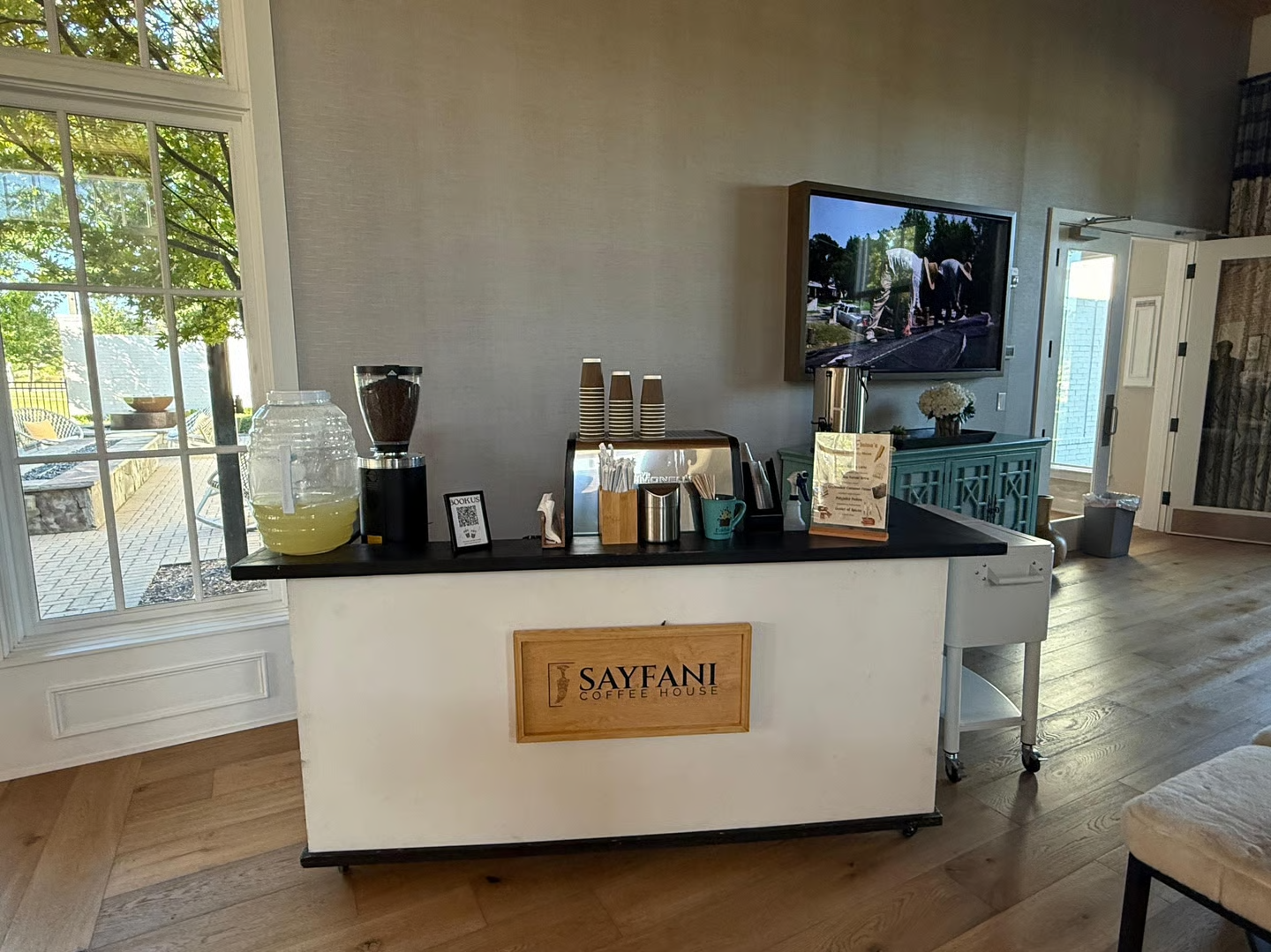
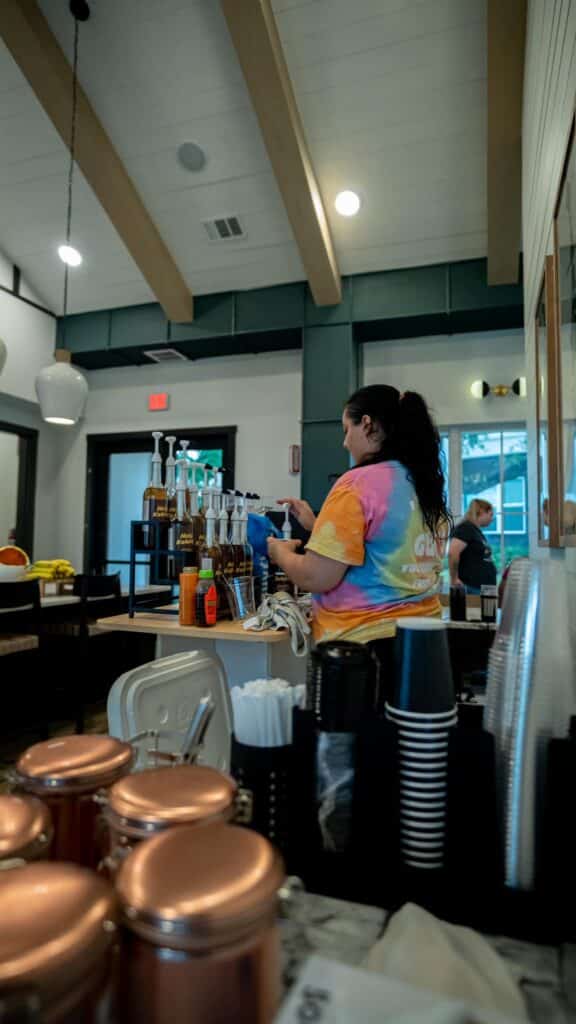
She may be counting down to a break from the classroom, but she’s gearing up for a busy season for her business: Blasia’s Coffee and Tea. On weekends and during her summer break, Blasia is behind the bar of her own coffee cart, pulling espresso shots and serving specialty teas to customers across the Austin area.
Blasia launched her coffee cart in 2025. In less than a year, Blasia has grown the business from the first pop-up at her apartment complex into a regular presence at farmers markets and private events. And she is just getting started! This summer, she’s transitioning from a coffee cart to a coffee truck.
This is the story of how she jumped right into coffee business ownership, all while holding down her full-time job as a teacher.
A Concept Built from a Personal Need
Blasia has been a coffee lover for as long as she can remember. Visiting coffee shops on the weekends was one of her family’s favorite pastimes. “I was probably one of those children that should not be drinking coffee at 11, but I’ve been drinking coffee my whole entire life,” she laughed.
After developing digestive issues and acid reflux a couple of years ago, Blasia had to stop drinking coffee. Her family outings to coffee shops stopped in turn. What started as personal research into lower-acid coffee options soon turned into something bigger.
“There have to be other people that are struggling with acid reflux and want to drink coffee,” Blasia thought. And that idea became the foundation for her business. Blasia’s Coffee and Tea uses darker roasts that are easier on the stomach, real tea leaves, and syrups made without additives. It is coffee designed to be gentle on digestion. Her specialty tea menu is inspired by her dad’s love of tea. (Her mom loves coffee.)
“Best of both worlds,” she said. “I’ll just have everything there.”
Texas Coffee School Paves the Way
Blasia had her business idea in place, but there was just one problem. Blasia, an English teacher, had no idea how to make coffee. Her original idea was to start a coffee trailer. When she first told her family she planned to open one, they lovingly pushed back.
“My parents were like, ‘You’re gonna start a coffee trailer? You like coffee, but you have no idea about coffee.’ I was like, you’re right,” Blasia admitted.
She’d done her research on TikTok and, after pricing out trailers, realized a coffee cart would be a more affordable entry point. But she still needed to develop the barista skills and operational knowledge required to run a successful coffee business and learn how to launch a coffee business successfully. That search ultimately led her to Texas Coffee School.
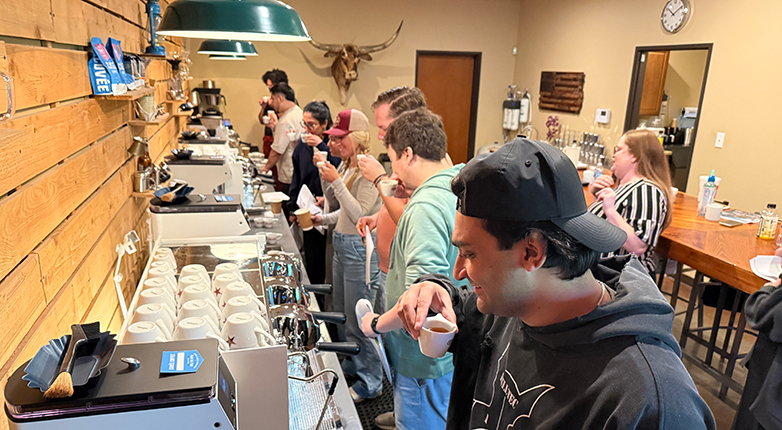
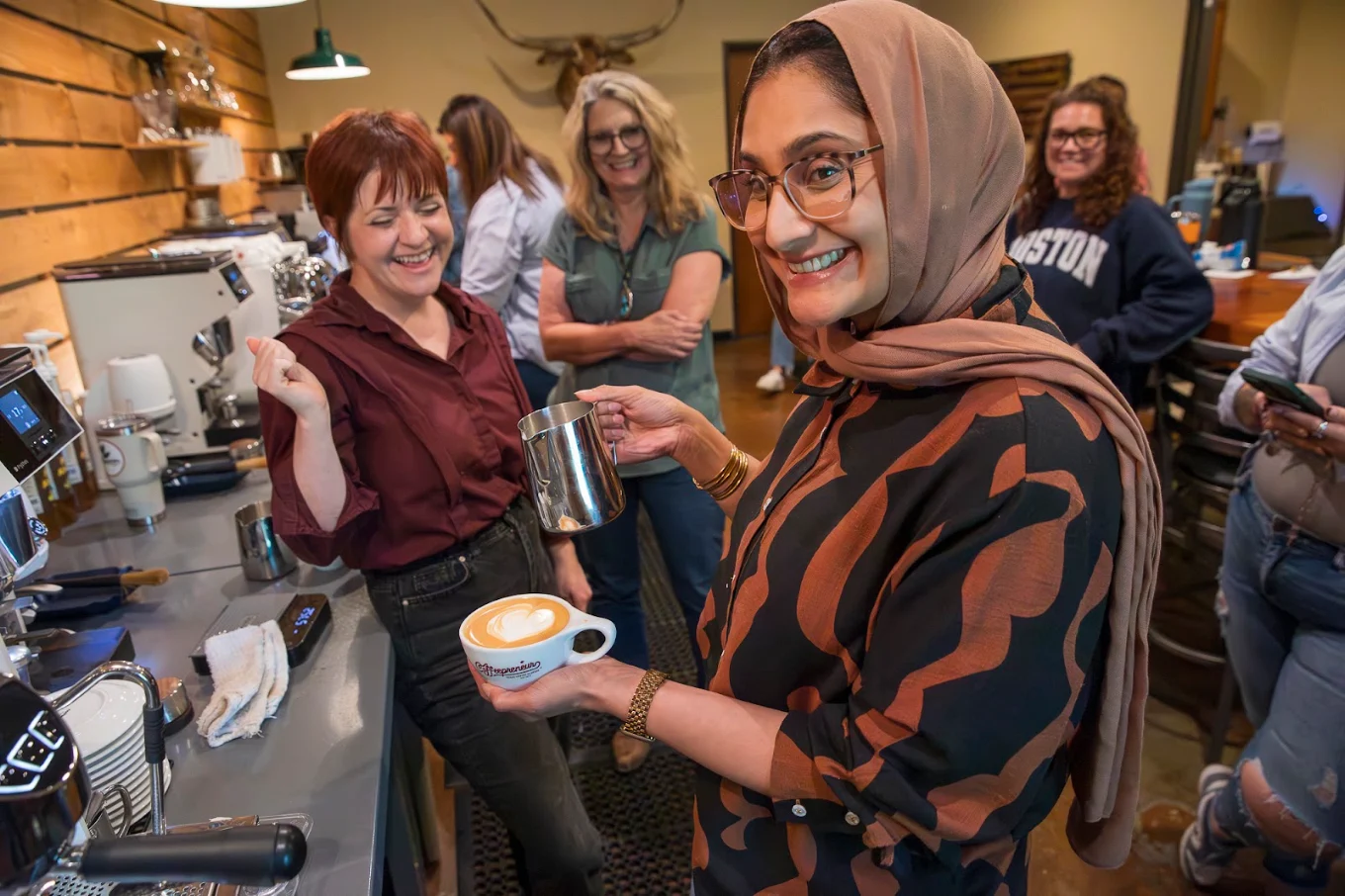
In April 2025, Blasia attended the Texas Coffee School 3-Day Coffee Business Master Class®. The class gave her the confidence and foundation to move forward with her cart. She still references the class materials regularly. A teacher through and through, Blasia took the materials home and kept it as her own curriculum.
“I put all the packets into three binders. The packets are probably the most helpful thing,” she shared.
From Idea to Open in a Sprint
Blasia chronicles the process about opening and running a coffee cart on TikTok for her followers to see. Her authenticity and humor both serve to help other entrepreneurs and to win over future customers. She’s shared her story from the start, including her ambitious plans last summer to open a business in under a month.
She ordered her cart from a builder and sourced her espresso machine through a direct manufacturer connection she made at Texas Coffee School. As a graduate, she received VIP support and preferred pricing, and her equipment arrived within a week. In the weeks that followed, she turned her apartment into a practice lab, dialing in shots and refining her workflow, refusing to launch until everything felt right.
“I’m a perfectionist in everything I do,” Blasia said. “It had to be perfect.”
Blasia’s first official pop-up was at her own apartment complex. From there, she started networking, researching farmers markets, and plowing through any hurdle that came her way.
@blasiacoffee I’ve spent the past year smiling all because I decided to take a risk. It’s definitely butterfly season this year. #coffee #smallbusiness #austintexas #coffeecart #texas
Learning the Mobile Coffee Landscape
Here are a few key lessons when considering opening a coffee cart business.
Considerations for Coffee Carts:
- Permits sit in a gray area for coffee carts. Mobile coffee businesses fall between traditional food trucks and pushcarts because the operator is not cooking. It is important to learn which permits actually apply to your business because requirements vary greatly by jurisdiction within the state. For private events, the health department may not require a mobile food permit, and farmers markets may be covered under a single permit that applies to all participating markets in the area.
- Hand washing stations require creativity at events. Many health departments require mobile food operations to have a three-compartment sink setup for washing, rinsing, and sanitizing. Since many coffee carts don’t have a built-in sink, operators commonly work around this at farmers markets and temporary events by setting up three separate buckets behind the cart (off the ground) to meet the requirement. Others will use three 1/3 size 4 inch stainless NSF certified food pans on a shelf directly under the counter of the cart labeled “wash,” “rinse,” “sanitize.” Some coffee cart manufacturers also offer interchangeable countertop options. You can order a separate three-compartment sink countertop with fitted covers that preserve usable workspace when the sinks aren’t actively needed. That flexibility allows operators to swap configurations depending on the type of event and local health department requirements, without permanently sacrificing valuable counter space.
- Setup and takedown is its own workout. Blasia loads everything from her parents’ house into her car about an hour before she has to leave, drives to the market, unloads, and assembles the cart on site. She arrives roughly three hours before the market opens. Early on, packing the car alone took 45 minutes. With practice, she and her fiancé got it down to 15 to 30 minutes.
- Weather can shut down an event. Because she’s not covered, rain can cancel a booking outright. Extreme heat is workable but uncomfortable. Blasia learned to build flexibility into her schedule for weather-related changes.
- Pre-built carts are an accessible starting point. Blasia did not build her cart from scratch. She found a builder who makes carts to order and ships them out, which dramatically simplified the launch process compared to building her own.

Farmers markets were a key piece of Blasia’s business strategy. Those, too, came with their own learning curve. Here are more considerations for coffee carts.
Farmers Market Considerations:
- Most farmers markets require an application. Vendors cannot just show up. Each market has its own process.
- Markets often cap vendor categories. If the coffee or drink slots are full, you go on a waitlist. Blasia spent from June through late July or early August on waitlists at multiple markets her first summer.
- Drink competition within a market matters. When several beverage vendors are at the same market (coffee, matcha, lemonade, soda), customers tend to pick one drink rather than buy from multiple vendors. More drink competition means a smaller share of each customer.
- Booth location can decide your day. Customers often buy from the first drink vendor they see. If you are positioned after another beverage vendor, customers may have already bought their drink by the time they reach you.
- The market organizer matters. At one of the markets Blasia works regularly, the organizer intentionally spaces drink vendors apart and limits direct competition so no one is at a disadvantage. That kind of curation makes a market more viable for vendors.
- Foot traffic depends on shared marketing. Farmers market attendance is driven by a combination of the market’s own promotion, the vendors’ promotion, and word of mouth. A market with weak marketing has fewer customers regardless of how good your product is.
- Not every market is the right fit. Blasia learned to evaluate which markets made sense for her business and which ones did not, based on attendance, vendor mix, and how the market was run.
What’s Next at Blasia’s Coffee and Tea
Another summer is coming, and Blasia is already scaling up. She is currently working with a local food truck builder to bring her next chapter to life: a coffee truck she hopes to have on the road by early summer. The plan is to park outside local businesses, schools, and preschools in the mornings, while continuing to grow her event and farmers market business.
Long term, she has bigger dreams still. Blasia imagines a brick-and-mortar coffee shop designed to look like an actual house, with a living room and a kitchen area where the drinks are made. For now, though, she is savoring what she has built so far.
“I would not be here if I didn’t have the cart,” she shared. In just one year, it gave her a solid foundation to scale. Here’s what she’s moving forward with:
- A clearer view of the permit landscape. With her knowledge from last summer in hand, the truck’s permitting should go much faster.
- Real knowledge of her market. A year of farmers markets, private events, and pop-ups has taught her which event types perform well and which to pass on.
- A built-in customer base. Customers already recognize her from farmers markets and social media, so the truck will not be starting from scratch. She’s already got rave reviews: “I absolutely love Blasia’s Coffee and Tea. My go-to is the hibiscus limeade with raspberry syrup. OMG. Delicious. I need her to come to my house every morning with one. She’s also too sweet and fun to chat with. Book her for your next event.”
- Strong barista skills. Weeks of dialing in shots at home, plus a year of pulling them in the field, mean she is bringing real barista experience to the truck.
- A tested concept. The cart let Blasia validate her low-acid, clean-ingredient approach before committing to the larger investment of a truck.

Start Where Blasia Started
Blasia’s story is a reminder that you do not need a coffee background, a six-figure budget, or to quit your full time job to start a coffee business. You need a clear concept, a hunger to succeed, and the right education:
Attend the class that helped Blasia launch Blasia’s Coffee and Tea. Sign up for our next 3-Day Coffee Business Master Class® today.
Frequently Asked Questions
Can I start a coffee cart business while working a full-time job?
Yes. Blasia Esposito is a full-time 7th grade English teacher who launched Blasia’s Coffee and Tea on weekends and during her summer break. A coffee cart is one of the most accessible entry points into coffee entrepreneurship because it requires a smaller upfront investment than a trailer or a brick-and-mortar shop, and the schedule can flex around another job.
How quickly can someone open a coffee cart?
It depends on the operator, but Blasia set out to open her cart in under a month after attending Texas Coffee School. Cart builders often ship within weeks, and equipment like espresso machines is generally available faster than a full trailer or truck build-out.
Do I need prior coffee experience to attend Texas Coffee School?
No. Many of our students attend with little or no coffee industry experience. Blasia had none when she signed up for the 3-Day Coffee Business Master Class®. The class is designed to take students from zero coffee experience to a working understanding of how to build a coffee business, including hands-on barista training, equipment selection, and business strategy.
What kinds of events can a coffee cart be booked for?
Coffee carts are popular at farmers markets, private parties, corporate events, weddings, school functions, and community pop-ups. Blasia’s Coffee and Tea serves the Austin area with packages built around different group sizes and event lengths.
How did Texas Coffee School help Blasia launch her coffee cart?
Texas Coffee School gave Blasia the technical foundation and business framework to move forward with confidence. She learned how to use and dial in an espresso machine, how to select the right equipment, what good espresso should taste like, and how to think about a coffee business as a business. She still references the class materials regularly.
Featured Classes


Register for a Coffee Class
The Best Coffee Training Available
We’ve helped hundreds of students successfully launch their own coffee shop businesses. Join us in our 5-Star Rated Coffee Classes, whether you’re an aspiring entrepreneur looking to open a coffee shop, a manager, a barista or home enthusiast looking to sharpen your skills.